

Hey there! As a supplier of DTY (Draw Textured Yarn), I'm super stoked to chat about the new technologies that are revolutionizing DTY yarn production. In this blog, I'll share some cool advancements that are making a big difference in our industry.
Automation and Robotics
One of the most significant changes in DTY yarn production is the increasing use of automation and robotics. These technologies are making the manufacturing process more efficient, accurate, and consistent.
Automated machines can perform tasks like winding, splicing, and quality control with a high degree of precision. They can work around the clock without getting tired, which means we can produce more yarn in less time. For example, robotic arms can handle the yarn during the texturing process, ensuring that it's processed evenly and without any tangles.
This not only improves the quality of the yarn but also reduces the risk of human error. With automation, we can also monitor the production process in real-time, making it easier to identify and address any issues that might arise.
Digitalization and Data Analytics
Digitalization is another game-changer in DTY yarn production. We're now using advanced software and sensors to collect and analyze data throughout the manufacturing process.
This data can tell us a lot about the quality of the yarn, the efficiency of the machines, and the overall performance of the production line. For instance, we can track things like temperature, humidity, and tension during the texturing process. By analyzing this data, we can make adjustments to optimize the production process and improve the quality of the yarn.
Data analytics also helps us with inventory management and production planning. We can use historical data to predict demand and adjust our production levels accordingly. This ensures that we have the right amount of yarn in stock at all times, reducing waste and improving our bottom line.
Nanotechnology
Nanotechnology is starting to make its mark in the DTY yarn industry. By incorporating nanoparticles into the yarn, we can enhance its properties in several ways.
For example, adding nanomaterials can make the yarn more resistant to stains, UV rays, and bacteria. This is especially useful for applications like outdoor clothing and sportswear. Nanotechnology can also improve the strength and durability of the yarn, making it suitable for high-stress applications.
In addition, nanomaterials can be used to create yarns with unique optical properties. For instance, we can make yarns that change color in response to different environmental conditions. This opens up new possibilities for fashion and design.
3D Printing
3D printing is not just for making plastic objects anymore. It's also being used in DTY yarn production to create complex and customized yarn structures.
With 3D printing, we can design and produce yarns with specific shapes and patterns. This allows us to create unique fabrics that are not possible with traditional manufacturing methods. For example, we can print yarns with intricate lace-like patterns or create yarns that have a 3D texture.
3D printing also offers the advantage of being able to produce small batches of yarn quickly and cost-effectively. This is great for designers and manufacturers who want to create limited-edition or custom-made products.
New Materials and Blends
In addition to new technologies, there are also some exciting developments in the use of new materials and blends in DTY yarn production.
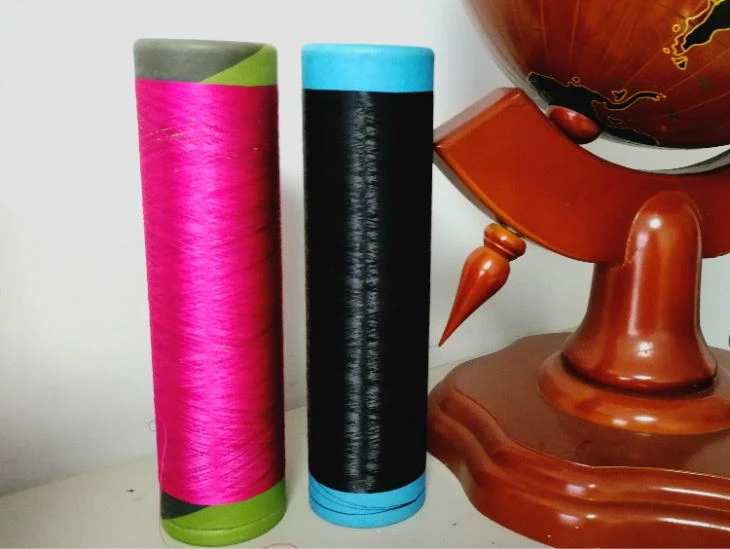

For example, Polybutylene Terephthalate Polyester High Strength Yarn And Dope Dyed Yarn is a new type of yarn that offers high strength and excellent dyeability. It's made from polybutylene terephthalate (PBT), which is a synthetic polymer. PBT yarns are known for their resistance to abrasion, chemicals, and heat, making them suitable for a wide range of applications.
Another popular option is POLYESTER DTY 50/24 BRIGHT 1H S-SIM. This is a polyester DTY yarn that has a bright finish and a high level of luster. It's commonly used in the fashion industry for making clothing, lingerie, and accessories.
We're also seeing an increase in the use of blends, which combine different types of fibers to create yarns with unique properties. For example, a blend of polyester and cotton can offer the best of both worlds – the durability of polyester and the comfort of cotton.
High Elasticity Yarns
High elasticity yarns are becoming increasingly popular in the textile industry. These yarns can stretch and recover their shape, making them ideal for applications like sportswear, swimwear, and lingerie.
High Elasitc Yarn Manufacturers 20Denier/9filament Black SD For Knitting is a great example of a high elasticity yarn. It's made with a special manufacturing process that gives it a high degree of stretch and recovery. This yarn is also available in a variety of colors, making it suitable for different design needs.
Conclusion
As you can see, there are a lot of exciting new technologies and materials being applied to DTY yarn production. These advancements are not only improving the quality and performance of the yarn but also opening up new possibilities for designers and manufacturers.
If you're in the market for high-quality DTY yarn, I'd love to have a chat with you. Whether you're looking for a specific type of yarn or need help with a custom project, I'm here to assist you. Contact me to start a discussion about your yarn requirements and let's see how we can work together to meet your needs.
References
- "Textile Technology: Principles and Processes" by A. R. Horrocks
- "Advanced Fibre Spinning Technology" by S. K. Das
- Industry reports and research papers on DTY yarn production