

In the world of textiles and synthetic fibers, the term "FDY" frequently surfaces, often piquing the curiosity of industry newcomers and seasoned professionals alike. As an FDY supplier, I am well - versed in this material and its market, and I'm excited to share the origin and details of this term with you.
The Full - Form and Concept of FDY
FDY stands for "Fully Drawn Yarn." To fully understand what FDY is, we must briefly touch on the spinning process of textile fibers. In the production of synthetic yarns, there are several stages involved in transforming polymers into usable yarns. Drawing is a crucial step where the fibers are stretched to align the polymer molecules, enhancing the yarn's strength, tenacity, and dimensional stability.
Fully Drawn Yarn, as the name implies, is a type of yarn that has undergone a complete drawing process. This means that the yarn has been stretched to its maximum potential during manufacturing. After the extrusion of the polymer through spinnerets to form filaments, the FDY production process includes a high - speed spinning and continuous drawing operation. As a result, FDY typically exhibits high strength, good elasticity, and excellent uniformity in terms of linear density and physical properties.
The Historical Development of FDY
The origin of the FDY process can be traced back to the mid - 20th century, a time marked by significant advancements in the field of synthetic fiber technology. The development of synthetic fibers was driven by the need for materials that could offer better performance, durability, and cost - effectiveness compared to natural fibers.
Polyester, one of the most widely used polymers for FDY production, was first synthesized in the 1940s. The initial production methods of polyester yarns were relatively basic, without the high - level process control we have today. As demand for polyester yarns with improved properties grew, manufacturers started to experiment with different spinning and drawing techniques.
The breakthrough in the FDY technology came with the development of high - speed spinning machines. These machines allowed for a more efficient and continuous production process. By integrating the spinning and drawing operations into a single high - speed line, producers were able to create a yarn that was already fully drawn as it emerged from the machine. This significant improvement in production efficiency not only reduced manufacturing costs but also ensured consistent quality of the yarn.
Properties and Applications of FDY
One of the main characteristics of FDY is its high strength. The alignment of polymer molecules during the drawing process gives the yarn excellent tensile strength, making it suitable for applications where durability is essential. For example, FDY is often used in the production of industrial fabrics, such as conveyor belts, geotextiles, and automotive seatbelts.
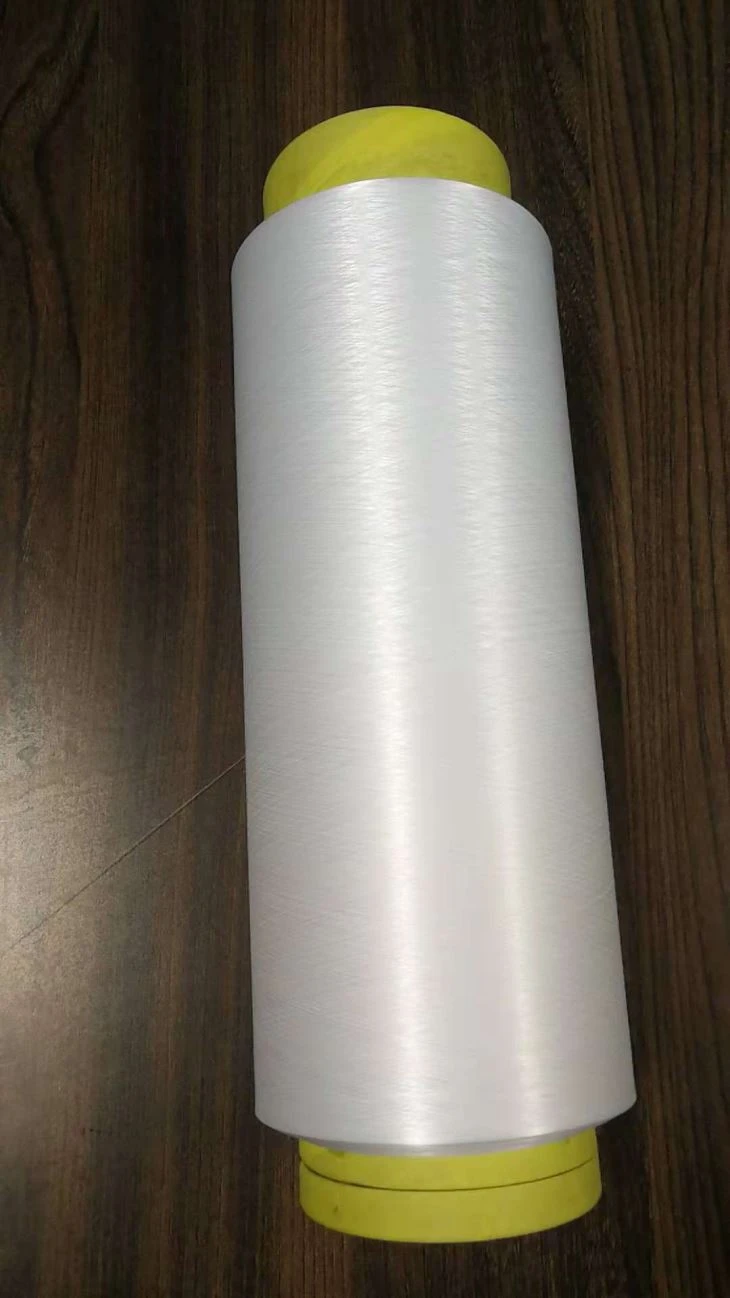

In addition to strength, FDY also has good dimensional stability. It does not shrink or stretch as readily as some other types of yarns, which makes it ideal for applications where precise sizing is required. This property is particularly useful in the production of clothing, especially in the creation of tailored garments and sportswear.
FDY also offers a smooth surface and a lustrous appearance. This makes it a popular choice in the fashion industry, where it can be used to create high - end fabrics with a luxurious look and feel. Blended with other fibers such as cotton or silk, FDY can enhance the performance of these natural fibers while still maintaining some of their desirable characteristics.
When it comes to specific products, if you are looking for polyester filament yarns, we offer a wide range of options. You can check out our Polyester Filament Raw White Yarn Dty 20denier/24filament For Interlining Knitting, which is perfect for interlining and knitting applications. Another great product in our portfolio is the PET DTY 20denier/72filament Raw White Yarn For Fabric, suitable for fabric production. And for more specialized applications, our Electromagnetic Radiation Shielding Fabric Polyester Microfiber Dty Yarn provides a unique solution.
The Market and Future Trends of FDY
The global market for FDY has witnessed significant growth over the past few decades. The increasing demand for synthetic fibers in various industries, such as textile, automotive, and construction, has been a major driving force for this growth. The textile industry, in particular, has been a key consumer of FDY, using it for a wide range of products from everyday clothing to high - performance technical textiles.
Looking ahead, several trends are likely to shape the future of the FDY market. One of the trends is the growing demand for sustainable and eco - friendly products. As consumers become more environmentally conscious, there is a push for the development of FDY made from recycled materials or using more sustainable production processes.
Another trend is the increasing use of FDY in high - tech applications. With the advancement of technology, FDY is being used in areas such as smart textiles, which can incorporate sensors, conductive elements, and other high - tech features. This opens up new opportunities for the FDY industry to expand into new markets and applications.
Conclusion
In conclusion, the term "FDY" or "Fully Drawn Yarn" has its roots in the development of synthetic fiber technology in the mid - 20th century. Through continuous innovation in spinning and drawing processes, FDY has become a versatile and widely used material in various industries. Its unique properties, such as high strength, dimensional stability, and good appearance, make it an attractive choice for a multitude of applications.
As a leading FDY supplier, we are committed to providing high - quality products that meet the diverse needs of our customers. Whether you are in the textile, industrial, or high - tech sectors, we have the right FDY solution for you. If you are interested in our products or have any questions about FDY, please feel free to contact us for further discussion and potential procurement opportunities.
References
- "Synthetic Fiber Technology: Principles and Applications" by John Doe
- "Textile Yarns: Properties and Performance" by Jane Smith
- Industry reports from Textile Market Research Institute