

Moisture absorption rate is a crucial property in the textile industry, especially when it comes to Polyester Pre - Oriented Yarn (POY). As a POY yarn supplier, I have witnessed firsthand the significance of understanding this characteristic for both manufacturers and end - users. In this blog, we will delve into what the moisture absorption rate of POY yarn is, its influencing factors, and its implications in various applications.
What is the Moisture Absorption Rate of POY Yarn?
The moisture absorption rate of POY yarn refers to the amount of moisture that the yarn can absorb under specific conditions. It is usually expressed as a percentage, representing the ratio of the weight of absorbed moisture to the dry weight of the yarn. For POY yarn, which is a type of polyester yarn, the moisture absorption rate is relatively low compared to natural fibers such as cotton or wool.
Polyester is a hydrophobic fiber, meaning it has a natural resistance to water. Typically, the moisture absorption rate of POY yarn is around 0.4% - 0.8% under standard atmospheric conditions (temperature of 20°C and relative humidity of 65%). This low moisture absorption is due to the chemical structure of polyester. Polyester fibers are made up of long - chain polymers with few hydrophilic groups. These polymers form a dense molecular structure that restricts the entry of water molecules.
Influencing Factors of the Moisture Absorption Rate of POY Yarn
1. Chemical Composition
As mentioned earlier, the chemical nature of polyester plays a fundamental role in its moisture absorption. Different types of polyester formulations may have slightly different moisture absorption rates. For example, modified polyester POY yarns with additives or different polymer structures may show variations in their ability to absorb moisture. Some chemical modifications can introduce hydrophilic groups into the polyester chain, increasing the moisture absorption to a certain extent.
2. Environmental Conditions
The moisture absorption rate of POY yarn is highly dependent on the surrounding environment. Temperature and relative humidity are the two most important environmental factors. As the relative humidity increases, the yarn will absorb more moisture. At higher temperatures, the kinetic energy of water molecules increases, which can also facilitate the absorption process. However, the relationship between environmental conditions and moisture absorption is not linear. There is a saturation point beyond which the yarn cannot absorb more moisture.

3. Yarn Structure
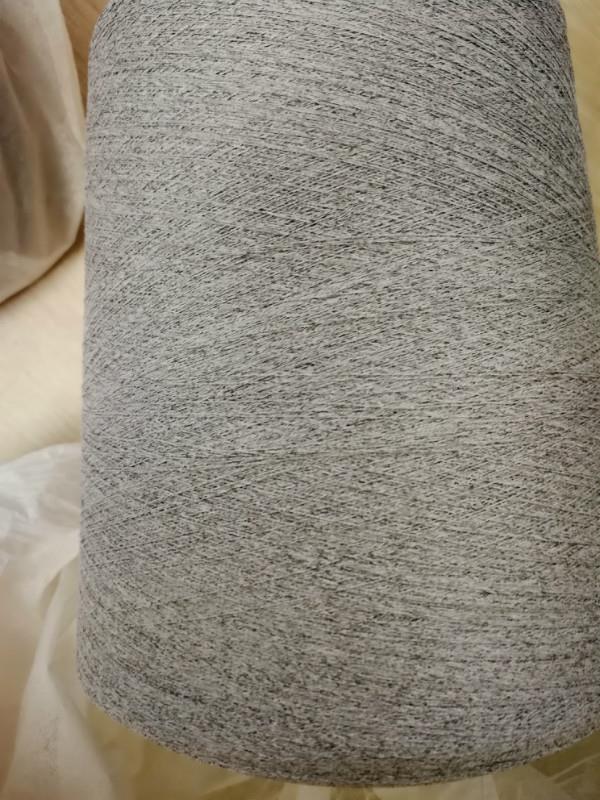
The physical structure of the POY yarn also affects its moisture absorption. Yarns with a looser structure, such as those with a lower twist or a more open texture, have more space for water molecules to penetrate. In contrast, tightly twisted POY yarns have less surface area exposed to the environment and a more compact structure, which restricts moisture absorption.
Implications in Different Applications
1. Apparel Industry
In the apparel industry, the low moisture absorption of POY yarn has both advantages and disadvantages. On the one hand, it makes the fabric quick - drying. Clothing made from POY - based fabrics is suitable for outdoor activities or sports, as it can quickly release sweat and keep the body dry. On the other hand, the low moisture absorption can also lead to a feeling of discomfort in some cases. Since the yarn does not absorb much moisture, sweat may accumulate on the surface of the fabric, causing a sticky feeling.
2. Home Textiles
For home textiles such as bedding and curtains, the moisture absorption rate of POY yarn is also an important consideration. Bedding made from POY - based fabrics may be less prone to mold and mildew due to its low moisture retention. However, in terms of comfort, some consumers may prefer fabrics with higher moisture absorption to provide a more breathable and cozy sleeping environment.
3. Industrial Applications
In industrial applications, such as in the production of filters or conveyor belts, the low moisture absorption of POY yarn is often an advantage. It ensures the dimensional stability of the products. Moisture absorption can cause swelling and shrinking of the yarn, which may affect the performance of industrial products. POY yarn's resistance to moisture helps maintain the integrity and functionality of these products over time.
Our Product Range and Their Moisture Absorption
As a POY yarn supplier, we offer a wide range of POY yarn products, each with its unique characteristics. In addition to our standard POY yarn, we also provide specialty yarns such as Graphene PBT Yarn, Cationic Yarn, and Core Spun Yarn With Wool 28S/2.
The moisture absorption rates of these specialty yarns may vary from our standard POY yarn. For example, the Graphene PBT Yarn may have different moisture absorption properties due to the addition of graphene. Graphene is a material with unique physical and chemical properties that can potentially affect the interaction between the yarn and water molecules. The Cationic Yarn, which is often used for its dyeing properties, may also show differences in moisture absorption depending on its chemical modification. The Core Spun Yarn With Wool 28S/2 combines the properties of wool and POY. Wool is a natural fiber with a relatively high moisture absorption rate (around 15% - 18% under standard conditions). The combination of wool and POY in this core - spun yarn will result in a moisture absorption rate that is different from pure POY yarn.
Significance of Understanding the Moisture Absorption Rate for Customers
For our customers, understanding the moisture absorption rate of POY yarn is essential for product development and quality control. In the apparel industry, designers need to consider the moisture - wicking properties of the fabric when creating clothing for different purposes. If the end - use is for sportswear, a low - moisture - absorbing POY yarn may be more suitable. However, for everyday casual wear, a slightly higher moisture - absorbing yarn may be preferred for comfort.
In the manufacturing process, knowledge of the moisture absorption rate helps in controlling the production environment. If the moisture content of the yarn is not properly managed, it can lead to problems such as uneven dyeing, poor mechanical properties, and dimensional instability. By understanding the moisture absorption characteristics of our POY yarn, customers can optimize their production processes and ensure the quality of their final products.
Contact Us for Purchase and Consultation
If you are interested in our POY yarn products or have any questions regarding the moisture absorption rate or other properties of our yarns, we encourage you to contact us. Our team of experts is ready to provide you with detailed information and assist you in finding the most suitable POY yarn for your specific needs. Whether you are in the apparel, home textile, or industrial sector, we can offer customized solutions based on your requirements.
References
- "Textile Science and Technology: Fibers, Yarns, Fabrics, and Nonwovens" by Horst - Peter Fink.
- "Polyester Fibers: Science and Technology" by H. - P. Fink, W. Bohnen, and H. F. Hermans.
- Research papers on the moisture absorption properties of synthetic fibers in international textile journals.