

Moisture absorption is a crucial property that can significantly influence the performance and applications of textile materials. As a reputable PBT yarn supplier, we understand the importance of this property and its implications for various industries. In this blog post, we will delve into the concept of moisture absorption of PBT yarn, exploring its significance, factors affecting it, and how it measures up against other yarns.
Understanding Moisture Absorption
Moisture absorption refers to the ability of a material to take in and hold moisture from its surrounding environment. In the context of textile yarns like PBT (polybutylene terephthalate), this property can affect not only the comfort of the end - product but also its durability, processing, and performance in different conditions.
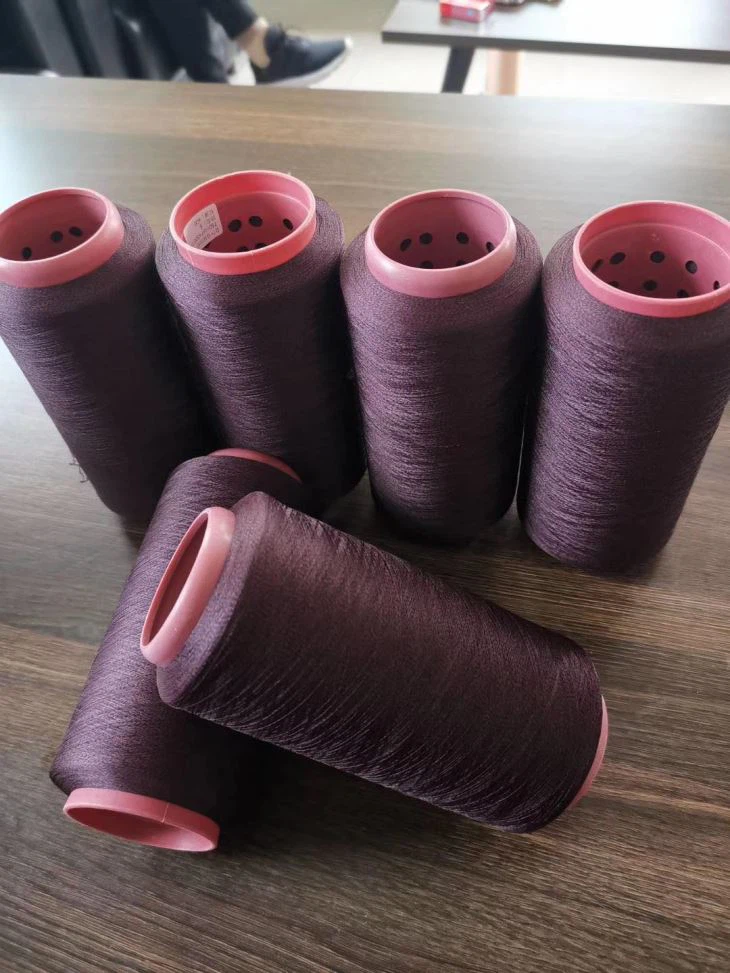

PBT is a semi - crystalline thermoplastic polyester. The moisture absorption of PBT yarn is relatively low compared to some natural fibers. Generally, under standard atmospheric conditions (20°C and 65% relative humidity), the moisture regain of PBT yarn is around 0.3 - 0.4%. Moisture regain is defined as the weight of moisture in a material expressed as a percentage of the weight of the dry material.
The low moisture absorption of PBT yarn has several distinct advantages. Firstly, it contributes to the dimensional stability of the yarn. Since PBT does not absorb a large amount of moisture, it is less likely to shrink or expand when exposed to changes in humidity. This is particularly important in applications where precise dimensions are required, such as in the production of technical textiles, automotive interiors, and industrial fabrics.
Secondly, it offers better resistance to mildew and rot. Because there is less moisture available for microorganisms to grow on the yarn, PBT - based products have a longer lifespan and require less maintenance. This makes PBT yarn a great choice for outdoor applications, such as in awnings, tents, and outdoor furniture fabrics.
Factors Affecting the Moisture Absorption of PBT Yarn
Several factors can influence the moisture absorption capacity of PBT yarn. One of the primary factors is the chemical structure of PBT itself. The polymer chains in PBT are relatively hydrophobic, meaning they have a low affinity for water molecules. This inherent property limits the amount of moisture the yarn can absorb.
The degree of crystallinity of the PBT also plays a role. Crystalline regions in the PBT polymer are more tightly packed, making it more difficult for water molecules to penetrate. Higher degrees of crystallinity generally result in lower moisture absorption. During the manufacturing process of PBT yarn, factors such as spinning speed, cooling rate, and heat - setting temperature can affect the degree of crystallinity of the final product.
Another factor is the surface area of the yarn. Finer denier PBT yarns have a larger surface area per unit mass compared to coarser denier yarns. A larger surface area provides more sites for water molecules to adsorb onto the yarn's surface. However, this effect is relatively small compared to the influence of the chemical structure and crystallinity.
Comparisons with Other Yarns
When compared to natural fibers such as cotton or wool, PBT yarn has significantly lower moisture absorption. Cotton has a moisture regain of about 7 - 8% under standard conditions, while wool can have a moisture regain of up to 16%. This high moisture absorption of natural fibers can make them more comfortable to wear in hot and humid conditions as they can absorb and wick away sweat from the skin. However, it also makes them more susceptible to shrinking, stretching, and the growth of mold and mildew.
In contrast, synthetic fibers like polyester (PET) also have relatively low moisture absorption, similar to PBT. However, PBT has some unique properties that set it apart. PBT has better elasticity and resilience compared to PET, which makes it ideal for applications where stretch and recovery are important, such as in sportswear and intimate apparel.
Applications of PBT Yarn Based on Moisture Absorption
The low moisture absorption of PBT yarn makes it suitable for a wide range of applications. In the automotive industry, PBT yarn is used for seat covers, headliners, and door panels. The dimensional stability and resistance to mildew and rot ensure that these components maintain their appearance and functionality over a long period, even in the face of varying humidity and temperature conditions.
In the sportswear industry, PBT yarn is often used in combination with other fibers to create fabrics that offer a balance of comfort, stretch, and moisture management. Although PBT itself does not absorb as much moisture as natural fibers, it can be engineered into fabrics with wicking properties. When blended with moisture - wicking fibers, PBT - containing fabrics can quickly move sweat away from the skin, keeping the wearer dry and comfortable during physical activities.
We also offer a variety of PBT yarn products, such as Blend Melange Dope Dyed Yarn, Draw Textured Yarn DTY and China Color Polyester Textured Filament Yarn Polyester Dty Yarn, which are designed to meet different application needs while leveraging the unique moisture - absorption characteristics of PBT.
Contact Us for PBT Yarn Procurement
If you are in the market for high - quality PBT yarn, we are here to assist you. Our team of experts can provide you with detailed information about our products, including their moisture - absorption properties and how they can be tailored to your specific requirements. Whether you are a small - scale manufacturer or a large - scale industrial enterprise, we have the capacity and expertise to meet your PBT yarn needs. Feel free to contact us to start a discussion about your procurement requirements.
References
- "Textile Science and Technology" by J. W. S. Hearle
- "Properties of Textile Fibers" by R. S. Christie
- Industry reports on PBT yarn production and application