

In the chemical industry, the term "FDY" holds significant importance, especially for those involved in the production and supply of synthetic fibers. As a supplier of FDY products, I am well - versed in its definition, characteristics, and applications. This blog aims to provide a comprehensive English definition of "FDY" in the chemical industry, along with insights into its relevance and our offerings in the market.
Definition of FDY
FDY stands for "Fully Drawn Yarn." It is a type of synthetic yarn that is produced through a specific manufacturing process. In the production of FDY, the polymer chips (usually polyethylene terephthalate or PET) are melted and then extruded through spinnerets to form filaments. These filaments are then drawn and oriented to achieve a high degree of molecular alignment. Unlike some other types of yarns, FDY is fully drawn during the spinning process, which gives it several distinct properties.
The fully drawn nature of FDY results in a yarn with a relatively high strength and low elongation. The molecular alignment in FDY makes the yarn more resistant to stretching and deformation. This characteristic is particularly beneficial in applications where dimensional stability is crucial. For example, in the textile industry, FDY can be used to make fabrics that maintain their shape well, even after repeated washing and wearing.
Manufacturing Process of FDY
The manufacturing process of FDY is a multi - step operation that requires precision and control. First, the raw polymer material, typically PET, is dried to remove any moisture. Moisture can cause problems during the melting and extrusion process, such as hydrolysis of the polymer, which can degrade the quality of the final product.
After drying, the polymer chips are fed into an extruder. In the extruder, the polymer is heated to its melting point, which is around 260 - 280°C for PET. The molten polymer is then forced through spinnerets, which are small plates with numerous tiny holes. As the molten polymer passes through these holes, it forms fine filaments.
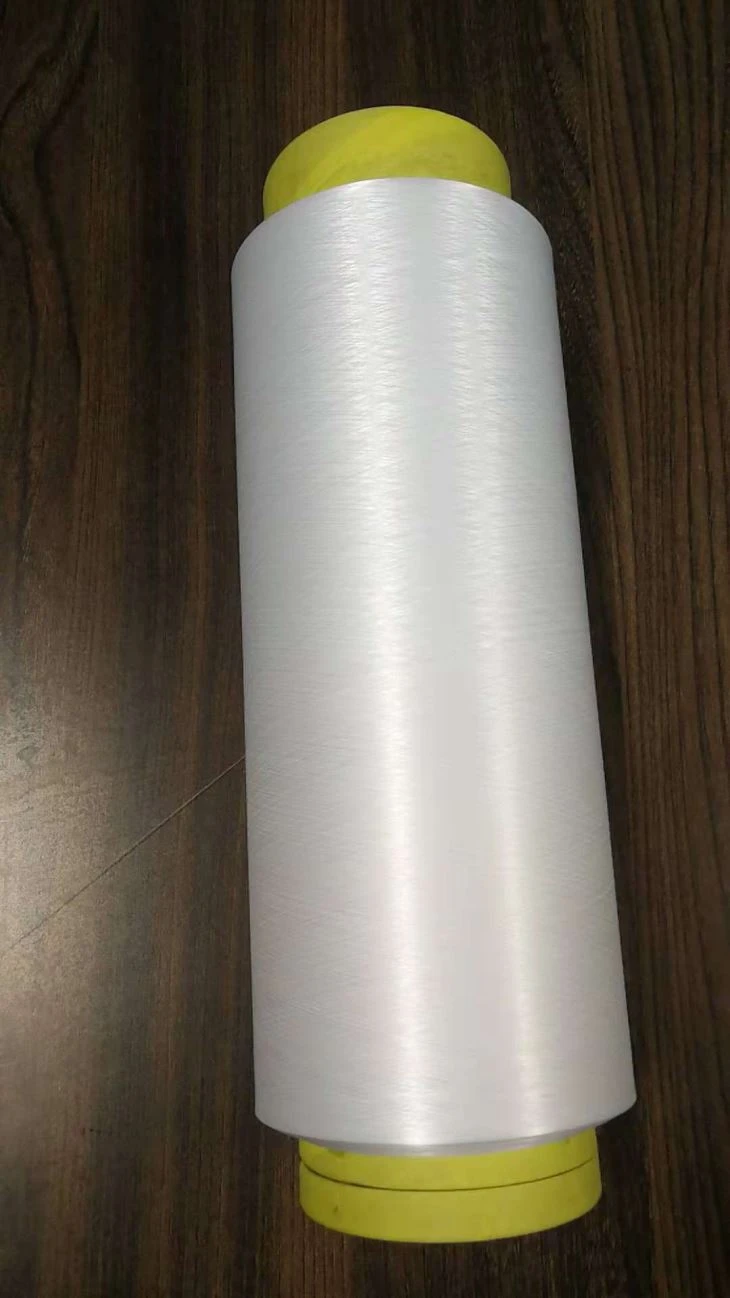

Once the filaments are formed, they are cooled rapidly. This cooling process helps to solidify the filaments and preserve their shape. After cooling, the filaments are drawn at a high speed using a series of godet rollers. The drawing process is the key step in the production of FDY. During drawing, the filaments are stretched to several times their original length, which aligns the polymer molecules in the direction of the yarn axis. This molecular alignment is what gives FDY its high strength and low elongation properties.
Properties of FDY
As mentioned earlier, one of the main properties of FDY is its high strength. The strength of FDY can vary depending on the specific manufacturing process and the type of polymer used. Generally, FDY has a tenacity (strength per unit linear density) in the range of 3 - 5 grams per denier. This high strength makes FDY suitable for applications where the yarn needs to withstand significant stress, such as in industrial textiles and some types of technical fabrics.
Another important property of FDY is its low elongation. Elongation refers to the percentage increase in the length of the yarn when a certain load is applied. FDY typically has an elongation at break of less than 30%, which is much lower than some other types of yarns, such as partially oriented yarn (POY). The low elongation of FDY ensures that the yarn does not stretch excessively under normal use, maintaining the integrity of the final product.
FDY also has good dyeability. The molecular structure of FDY allows dyes to penetrate the yarn easily, resulting in vibrant and long - lasting colors. This property makes FDY a popular choice in the textile industry for making colorful fabrics.
Applications of FDY
In the textile industry, FDY has a wide range of applications. It can be used to make various types of fabrics, including apparel, home textiles, and industrial textiles. In apparel, FDY can be used to make shirts, dresses, and suits. The high strength and low elongation of FDY make the garments more durable and resistant to wrinkling.
For home textiles, FDY can be used to make curtains, bed sheets, and upholstery. The dimensional stability of FDY ensures that these home textile products maintain their shape and appearance over time. In industrial textiles, FDY is used in applications such as conveyor belts, geotextiles, and automotive interiors. The high strength and resistance to abrasion of FDY make it suitable for these demanding applications.
Our Offerings as an FDY Supplier
As an FDY supplier, we offer a wide range of FDY products to meet the diverse needs of our customers. Our FDY products are available in different deniers and filament counts. Denier is a unit of measurement for the linear density of the yarn, and filament count refers to the number of individual filaments in the yarn.
We also provide high - quality FDY with excellent color fastness. Our dyeing process ensures that the colors of our FDY products remain vivid and do not fade easily. In addition to standard FDY, we also offer specialty FDY products, such as Cationic Dyeable Polyetser Fibre. Cationic dyeable FDY can be dyed with cationic dyes, which offer a wider range of colors and better color fastness compared to traditional dyes.
Another specialty product we offer is T400 Dope Dyed Stretch Yarn. This type of FDY combines the stretch properties of T400 with the color - fastness of dope - dyed yarn. Dope - dyeing is a process where the color is added to the polymer before extrusion, resulting in a yarn with the color throughout its entire cross - section.
We also have PET DTY 20denier/72filament Raw White Yarn For Fabric in our product portfolio. This yarn is suitable for making high - quality fabrics with a soft feel and good drape.
Why Choose Our FDY Products
There are several reasons why customers should choose our FDY products. Firstly, we have a strict quality control system in place. From the selection of raw materials to the final inspection of the finished products, every step of the production process is carefully monitored. This ensures that our FDY products meet the highest quality standards.
Secondly, we offer competitive pricing. We understand the importance of cost - effectiveness in today's market. By optimizing our production process and supply chain management, we are able to offer high - quality FDY products at a reasonable price.
Thirdly, we have a professional and experienced customer service team. Our team is always ready to provide technical support and answer any questions that our customers may have. Whether it is about product selection, application advice, or after - sales service, our customer service team is committed to providing the best possible solutions.
Contact Us for Procurement
If you are interested in our FDY products or have any questions about FDY in general, we encourage you to contact us for procurement and further discussion. We are eager to work with you to meet your specific requirements and provide you with the best - quality FDY products. Whether you are a small - scale textile manufacturer or a large - scale industrial user, we have the products and services to meet your needs.
References
- "Synthetic Fibers: Nylon, Polyester, Acrylic, Olefin" by Frank Harris.
- "Textile Science" by Robert G. McDevitt.
- Industry reports on synthetic fiber production and applications.