

As a supplier of PA66 yarn, I've been deeply involved in the industry, witnessing firsthand the diverse needs and challenges our customers face when it comes to dyeing PA66 yarn. PA66, also known as nylon 66, is a widely used synthetic fiber renowned for its high strength, excellent abrasion resistance, and good chemical stability. However, choosing the right dyes for PA66 yarn is crucial to achieving the desired color fastness, color brilliance, and overall quality of the final product. In this blog post, I'll share some insights into the types of dyes that are suitable for PA66 yarn, based on my years of experience in the field.
Acid Dyes
Acid dyes are one of the most commonly used dyes for PA66 yarn. These dyes are water - soluble and contain acidic groups that can form ionic bonds with the amino groups present in the PA66 polymer chain. The interaction between the acid dyes and the PA66 yarn results in good color fastness, especially to washing and light.
Acid dyes offer a wide range of bright and vivid colors, making them ideal for applications where color brilliance is required, such as in the production of high - fashion clothing, sportswear, and decorative fabrics. They can be applied to PA66 yarn using various dyeing methods, including exhaust dyeing, continuous dyeing, and pad dyeing.
When using acid dyes, it's important to control the pH of the dye bath. A slightly acidic pH (usually around 4 - 6) is optimal for achieving good dye uptake and color fastness. Additionally, the addition of dyeing auxiliaries such as leveling agents and retarders can help ensure even dyeing and prevent color streaks. You can find high - quality PA66 yarn suitable for acid dyeing on our website, where we offer a variety of options like Nylon Filament Dope Dyed Yarn 20D /12F,40D/12F/2PLY, 70D/24F/2PLY.
Metal Complex Dyes
Metal complex dyes are another type of dyes that are well - suited for PA66 yarn. These dyes are formed by the complexation of a dye molecule with a metal ion, usually chromium, cobalt, or nickel. The metal complex structure provides enhanced color fastness, particularly to light and wet treatments.
Metal complex dyes offer a more subdued color palette compared to acid dyes, but they are known for their excellent fastness properties. They are commonly used in applications where long - term color stability is essential, such as in outdoor fabrics, automotive interiors, and industrial textiles.
The dyeing process for metal complex dyes is similar to that of acid dyes, but it may require more careful control of the dye bath conditions, including temperature, pH, and the concentration of the metal complex dye. Some metal complex dyes may also require a post - treatment process to further improve their color fastness.
Disperse Dyes
Although disperse dyes are primarily used for polyester fibers, they can also be used to dye PA66 yarn under certain conditions. Disperse dyes are non - ionic and insoluble in water, but they can be dispersed in water with the help of dispersing agents.
When dyeing PA66 yarn with disperse dyes, a high - temperature and high - pressure dyeing process is usually required. The disperse dyes can penetrate the PA66 fiber at elevated temperatures, resulting in good color fastness to washing and sublimation.
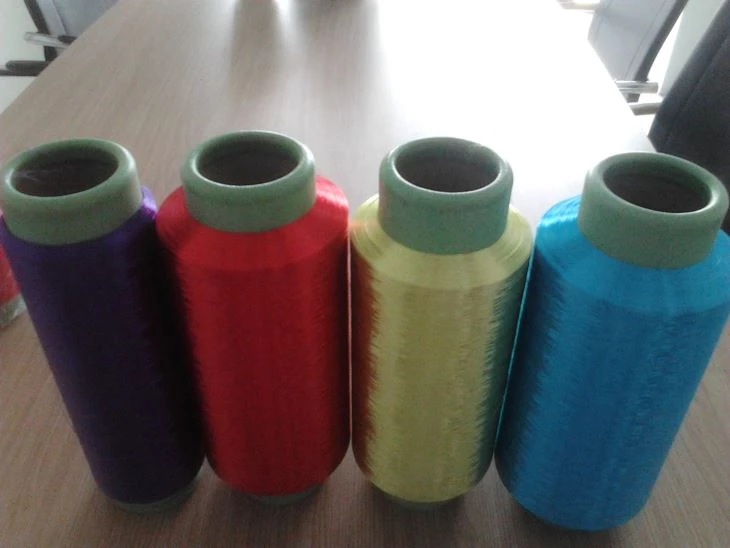

Disperse dyes offer a wide range of colors and are particularly suitable for applications where a high - level of color fastness to heat is required, such as in the production of heat - set fabrics. However, the high - temperature dyeing process may have some impact on the physical properties of the PA66 yarn, so it's important to optimize the dyeing conditions to minimize any negative effects.
Reactive Dyes
Reactive dyes are known for their ability to form covalent bonds with the fiber molecules. While they are more commonly used for natural fibers like cotton, they can also be used to dye PA66 yarn. Reactive dyes offer excellent color fastness, especially to washing and rubbing.
The dyeing process with reactive dyes on PA66 yarn is more complex compared to other types of dyes. It usually involves an alkaline dye bath and a fixation step to ensure the formation of covalent bonds between the dye and the fiber. Reactive dyes can provide a wide range of colors and are suitable for applications where high - quality and long - lasting color is desired.
Considerations When Choosing Dyes for PA66 Yarn
When selecting dyes for PA66 yarn, several factors need to be considered:
- Color Requirements: The desired color shade, brightness, and color fastness play a crucial role in determining the type of dye. For bright and vivid colors, acid dyes may be the best choice, while for more subdued and light - fast colors, metal complex dyes may be preferred.
- End - Use Application: Different end - use applications have different requirements for color fastness. For example, outdoor fabrics need dyes with high light fastness, while clothing for daily wear requires good washing fastness.
- Dyeing Process: The available dyeing equipment and process capabilities also influence the choice of dyes. Some dyes require specific dyeing conditions, such as high temperature, high pressure, or a particular pH range.
- Cost: The cost of the dyes, including the dye itself and the associated dyeing auxiliaries, is an important consideration for manufacturers. It's important to balance the cost with the desired quality and performance of the dyed yarn.
At our company, we understand the importance of providing high - quality PA66 yarn that can be dyed effectively with different types of dyes. We also offer other related products such as DTY AND FDY polyamide Nylon56 Dope Dyed Yarn or PA 56 yarn and Nylon6 Dope Dyed DTY AND FDY Yarn for socks, cloth , fabric and so on.
If you're in the market for PA66 yarn or have questions about dyeing our products, we encourage you to reach out to us for a detailed discussion. Our team of experts is always ready to provide you with the best solutions tailored to your specific needs. Whether you're a small - scale fabric manufacturer or a large - scale textile producer, we can help you find the right PA66 yarn and the most suitable dyes for your projects. Contact us today to start a procurement negotiation and take your textile production to the next level.
References
- Lewis, D. M. (2007). "The Dyeing of Synthetic Fibres". The Textile Institute.
- Shore, J. (1995). "Cellulosic Dyeing: Principles, Processes and Properties". SDC Publications.
- Trotman, E. R. (1993). "Dyeing and Chemical Technology of Textile Fibres". Blackie Academic & Professional.