

Hey there! As a dope dyed supplier, I've got a ton to share about the quality control measures for dope dyed products. Let's dive right in.
First off, what's dope dyeing? Well, it's a process where colorants are added to the polymer solution before the fiber is formed. This is different from post - dyeing, where the already - made fiber is dyed. Dope dyed products have some awesome advantages, like better color fastness, less environmental impact, and more uniform color distribution.
Raw Material Inspection
The quality control journey starts with the raw materials. We can't compromise on the polymer and the colorants we use. When it comes to the polymer, we check for its viscosity, molecular weight, and purity. A change in these properties can significantly affect the final product. For example, if the viscosity is too high, the spinning process can become difficult, leading to uneven fibers.
As for the colorants, we make sure they're of high quality and compatible with the polymer. We test their heat stability because during the dope dyeing process, high temperatures are involved. If the colorant breaks down under heat, it'll mess up the color of the final product. We also check for the dispersion ability of the colorants. They need to be evenly dispersed in the polymer solution to ensure uniform color throughout the fiber.
In - Process Monitoring
Once the raw materials are approved, we move on to the actual dope dyeing process. This is where real - time monitoring is crucial. We keep a close eye on the temperature and pressure during the mixing of the polymer and colorants. Any fluctuations can lead to color variations or defects in the fibers.
For instance, if the temperature is too low, the colorant might not dissolve properly in the polymer, resulting in specks or streaks in the final product. On the other hand, if the pressure is inconsistent, it can cause variations in the fiber diameter.
We also use online sensors to check the concentration of the colorant in the polymer solution. This helps us maintain the desired color intensity. If the concentration is off, we can adjust it right away to avoid producing sub - standard products.
Spinning Quality Control
The spinning process is a make - or - break stage. We need to ensure that the fibers are spun at the right speed and tension. If the spinning speed is too high, the fibers can break, and if it's too low, the fibers might not have the right strength.
We regularly inspect the spinnerets, which are the small holes through which the polymer solution is extruded to form fibers. Any blockages or damages to the spinnerets can lead to uneven fibers. We clean and maintain the spinnerets to prevent such issues.
After spinning, we test the physical properties of the fibers, such as tenacity, elongation, and fineness. These properties are important as they determine the performance of the fibers in different applications. For example, in sock manufacturing, the fibers need to have good elasticity and strength to withstand the stretching and movement.
Color Consistency Checks
Color is one of the most important aspects of dope dyed products. We use color measurement instruments to ensure color consistency. We have a standard color sample for each product, and we compare the newly produced fibers against it.
We measure the color in terms of hue, saturation, and brightness. Any deviation from the standard is carefully analyzed. If there's a color difference, we trace back the process to find out where the problem occurred. It could be due to a change in the raw materials, a malfunction in the mixing equipment, or an issue during the spinning process.
We also conduct color fastness tests. This includes tests for washing, light, and rubbing fastness. We want our products to maintain their color even after multiple washes or exposure to sunlight.
Packaging and Storage Quality Control
Once the fibers are produced and tested, we move on to packaging. We use high - quality packaging materials to protect the fibers from damage during transportation and storage. The packaging should be air - tight to prevent moisture from affecting the fibers.

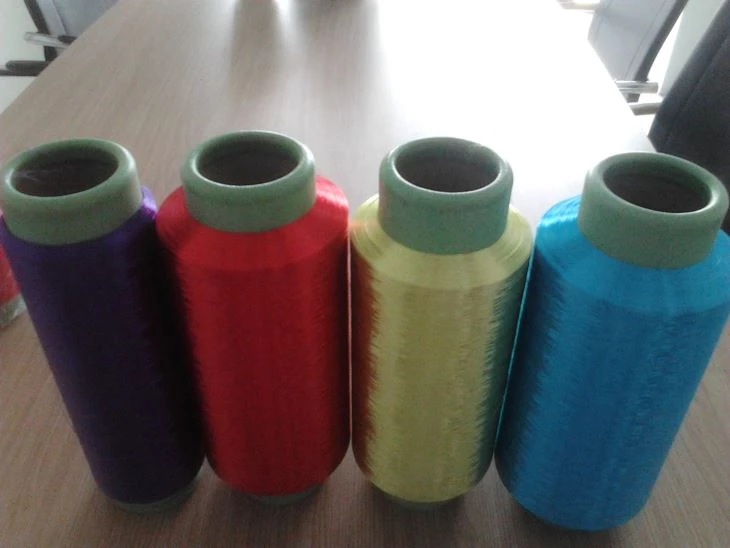
We label the packages correctly with information such as the product type, color, batch number, and manufacturing date. This helps with traceability in case there are any quality issues later on.
During storage, we maintain the right temperature and humidity conditions. High humidity can cause the fibers to absorb moisture, which can lead to mold growth or a change in the physical properties of the fibers.
Product Sampling and Testing
We follow a strict sampling plan to test our products. We take samples from different batches and conduct a series of tests. This includes not only the physical and color tests we've already mentioned but also chemical tests to check for any impurities.
We also send samples to independent third - party laboratories for verification. This gives our customers an extra level of confidence in the quality of our products.
Customer Feedback and Continuous Improvement
Customer feedback is invaluable to us. We listen to what our customers have to say about our products. If they notice any quality issues, we take it seriously and investigate immediately.
We use the feedback to make continuous improvements to our quality control measures. For example, if customers complain about the color fading after a short period, we'll look into our color fastness tests and see if we need to adjust our processes or use different colorants.
Our Product Range
We offer a wide range of dope dyed products. For example, we have Nylon6 Dope Dyed DTY AND FDY Yarn for socks, cloth, fabric and so on. This yarn is perfect for various textile applications, thanks to its excellent color and physical properties.
We also have Nylon Filament Dope Dyed Yarn 20D /12F,40D/12F/2PLY, 70D/24F/2PLY, which is available in different deniers and ply options to meet different customer requirements.
And if you're looking for something more innovative, check out our DTY AND FDY polyamide Nylon56 Dope Dyed Yarn or PA 56 yarn. It has unique properties that make it suitable for high - performance applications.
Contact Us for Purchasing
If you're interested in our dope dyed products, don't hesitate to reach out to us for a purchase discussion. We're always ready to work with you to meet your specific needs. Whether you're a small - scale manufacturer or a large - scale textile company, we can provide you with high - quality dope dyed products at competitive prices.
References
- Textile Dyeing and Finishing Technology, by Xungai Wang
- Handbook of Fiber Science and Technology, Volume 3: High - Performance Fibers, by Menachem Lewin and Eli M. Pearce