

Hey there! As a supplier of PA yarn, I've been getting a bunch of questions lately about the differences between PA6 and PA66 yarn. So, I thought I'd break it down for you in this blog post.

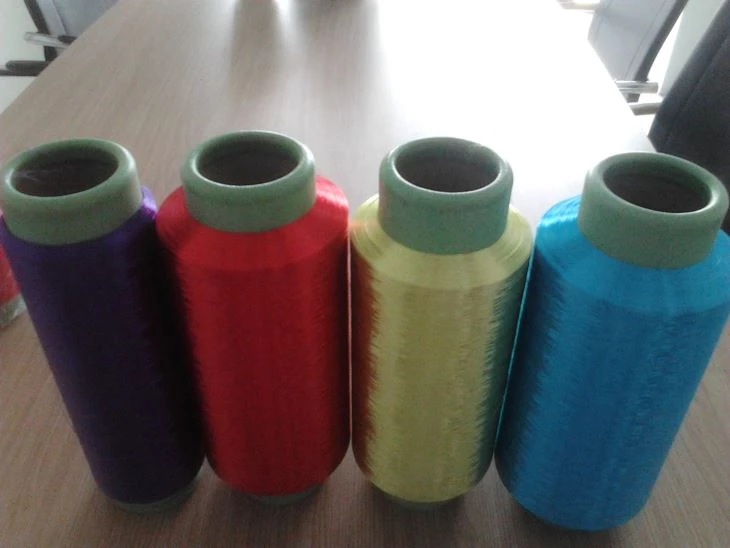
First off, let's talk about what PA6 and PA66 actually are. PA stands for polyamide, which is a type of synthetic polymer. PA6 and PA66 are two different types of polyamide yarns, and they have some key differences that you should know about if you're in the market for this kind of stuff.
Chemical Structure and Production
The main difference between PA6 and PA66 lies in their chemical structures. PA6 is made from caprolactam, while PA66 is made from hexamethylenediamine and adipic acid. This difference in raw materials affects how they're produced. PA6 is usually made through a ring-opening polymerization process, and PA66 is produced by a condensation polymerization reaction.
The production process also impacts the cost. Generally, PA6 is a bit cheaper to produce than PA66 because the raw materials for PA6 are less expensive and the production process is relatively simpler. If you're on a tight budget, PA6 might be a more cost - effective option for you.
Physical Properties
Melting Point
One of the most noticeable differences in physical properties is the melting point. PA66 has a higher melting point, around 250 - 260°C, while PA6 melts at about 215 - 225°C. This means that PA66 can withstand higher temperatures without losing its shape or properties. If your application involves high - temperature environments, like in some industrial settings, PA66 might be the better choice.
Tensile Strength
PA66 also typically has higher tensile strength than PA6. Tensile strength is the ability of a material to resist being pulled apart. In applications where the yarn needs to bear heavy loads or be subject to strong forces, PA66 will perform better. For example, in making ropes or high - stress fabrics, PA66 can handle more stress before breaking.
Moisture Absorption
When it comes to moisture absorption, PA6 absorbs more moisture than PA66. This can be a double - edged sword. On one hand, in some applications like textiles, a bit of moisture absorption can be beneficial as it can make the fabric feel more comfortable to wear. On the other hand, too much moisture absorption can affect the dimensional stability of the yarn. If dimensional stability is crucial for your project, PA66 might be a better fit.
Applications
Textile Industry
In the textile industry, both PA6 and PA66 are widely used. PA6 is often used in making hosiery, lingerie, and some sportswear. It has good elasticity and is relatively soft, which makes it comfortable to wear. You can check out our Nylon6 Dope Dyed DTY AND FDY Yarn for socks, cloth , fabric and so on for more options in PA6 yarn for textile applications.
PA66, with its higher strength and heat resistance, is commonly used in industrial textiles such as conveyor belts, airbags, and tire cords. Its ability to withstand high stress and heat makes it ideal for these heavy - duty applications.
Engineering Plastics
For engineering plastics, PA66 is more popular. It's used in making automotive parts, electrical components, and machinery parts. The high melting point and strength of PA66 make it suitable for parts that need to endure harsh conditions. PA6 can also be used in engineering plastics, but for less demanding applications where cost is a major factor.
Appearance and Dyeing
In terms of appearance, both PA6 and PA66 can be made into very fine and smooth yarns. However, PA6 generally has a slightly softer and silkier feel, which can be an advantage in some textile applications where a luxurious touch is desired.
When it comes to dyeing, PA6 is usually easier to dye than PA66. PA6 has better dye - uptake, which means it can achieve more vibrant and consistent colors. If color is an important aspect of your product, PA6 might be the way to go.
Our Product Range
As a PA yarn supplier, we offer a wide range of both PA6 and PA66 yarns. For example, our Nylon Filament Dope Dyed Yarn 20D /12F,40D/12F/2PLY, 70D/24F/2PLY comes in different deniers and filament counts, suitable for various applications. We also have DTY AND FDY polyamide Nylon56 Dope Dyed Yarn or PA 56 yarn for those looking for something a bit different.
Which One to Choose?
The choice between PA6 and PA66 depends on your specific needs. If you need a cost - effective option with good dyeability and a soft feel for textile applications, PA6 is a great choice. But if you require high - temperature resistance, high strength, and better dimensional stability, especially for industrial applications, PA66 is the way to go.
Let's Connect
If you're interested in purchasing PA yarn for your business, whether it's PA6, PA66, or our other products, don't hesitate to reach out. We're here to help you find the perfect yarn for your needs. We can offer samples so you can test the quality and performance before making a large - scale purchase.
In conclusion, understanding the differences between PA6 and PA66 is crucial for making the right choice in your projects. I hope this blog post has given you a better understanding of these two types of yarns. If you have any more questions, feel free to ask.
References
- “Polyamide 6 and Polyamide 66: Properties and Applications” - Polymer Science Journal
- “Textile Applications of PA6 and PA66 Yarns” - Textile Research Magazine