

Is PET yarn safe for human contact? This is a question that often arises when considering the use of PET (Polyethylene Terephthalate) yarn in various applications, especially those involving direct human interaction. As a PET yarn supplier, I am frequently asked about the safety aspects of our products. In this blog post, I will delve into the science behind PET yarn and its safety for human contact.
Understanding PET Yarn
PET yarn is a synthetic fiber made from polyethylene terephthalate, a thermoplastic polymer. It is widely used in the textile industry due to its numerous advantages, including high strength, durability, resistance to wrinkles, and ease of maintenance. PET yarn can be found in a variety of products, such as clothing, home textiles, and industrial applications.
Safety Considerations
When it comes to human contact, several factors need to be considered to determine the safety of PET yarn. These include chemical composition, potential for skin irritation, and environmental impact.
Chemical Composition
PET is a polymer composed of repeating units of ethylene terephthalate. It is a relatively stable and inert material, which means it does not readily react with other substances. In its pure form, PET is considered safe for human contact. However, during the manufacturing process, additives and dyes may be used to enhance the properties of the yarn. These additives can vary depending on the specific application and the desired characteristics of the final product.
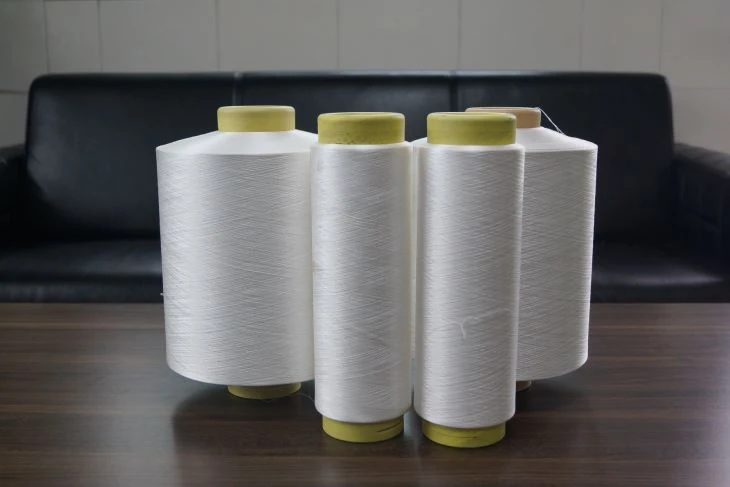

It is important to note that reputable PET yarn suppliers, like us, adhere to strict quality control standards and use only approved additives and dyes. These substances are carefully selected to ensure they meet safety regulations and do not pose a risk to human health. Additionally, we conduct regular testing to verify the safety of our products and to ensure compliance with relevant standards and regulations.
Skin Irritation
One of the main concerns regarding human contact with PET yarn is the potential for skin irritation. In general, PET yarn is considered to be hypoallergenic and does not cause skin irritation in most people. However, some individuals may be sensitive to synthetic fibers or certain additives used in the manufacturing process.
To minimize the risk of skin irritation, it is recommended to choose PET yarn products that are labeled as hypoallergenic or suitable for sensitive skin. Additionally, proper care and maintenance of the products can help prevent skin irritation. This includes washing the products before first use, following the recommended washing instructions, and avoiding using harsh chemicals or detergents.
Environmental Impact
Another important aspect to consider is the environmental impact of PET yarn. PET is a recyclable material, which means it can be reused to make new products. Recycling PET yarn helps reduce waste and conserve natural resources. Additionally, the manufacturing process of PET yarn has become more environmentally friendly in recent years, with the use of energy-efficient technologies and the reduction of waste and emissions.
As a PET yarn supplier, we are committed to sustainability and environmental responsibility. We strive to minimize our environmental impact by using recycled materials, reducing waste, and implementing energy-efficient practices in our manufacturing processes.
Our Product Range
At our company, we offer a wide range of PET yarn products that are safe for human contact. Our products are made from high-quality materials and are carefully manufactured to meet the highest standards of quality and safety. Some of our popular products include:
- T400 Dope Dyed Stretch Yarn: This yarn is made from a blend of PET and other fibers, which gives it excellent stretch and recovery properties. It is suitable for a variety of applications, including sportswear, lingerie, and swimwear.
- Cationic Dyeable Polyester Fibre: This fiber is specially designed to be dyed with cationic dyes, which gives it vibrant and long-lasting colors. It is commonly used in the production of carpets, upholstery, and other home textiles.
- Polyester Flame Retardant 150/288 Full-dull Raw White Filament Yarn: This yarn is treated with a flame retardant to meet the safety requirements of various industries. It is suitable for use in applications where fire safety is a concern, such as automotive interiors, aircraft seating, and protective clothing.
Conclusion
In conclusion, PET yarn is generally considered safe for human contact when it is made from high-quality materials and manufactured using approved additives and dyes. Reputable PET yarn suppliers, like us, adhere to strict quality control standards and conduct regular testing to ensure the safety of their products. However, it is important to choose PET yarn products that are suitable for your specific needs and to follow the recommended care and maintenance instructions to minimize the risk of skin irritation.
If you are interested in learning more about our PET yarn products or have any questions about their safety, please do not hesitate to contact us. We are always happy to assist you and to provide you with the information you need to make an informed decision. We look forward to the opportunity to work with you and to supply you with high-quality PET yarn products that meet your requirements.
References
- American Chemistry Council. (n.d.). Polyethylene Terephthalate (PET). Retrieved from [https://www.americanchemistry.com/Plastics/Plastic - Resin - Profiles/Polyethylene - Terephthalate - PET](https://www.americanchemistry.com/Plastics/Plastic - Resin - Profiles/Polyethylene - Terephthalate - PET)
- International Agency for Research on Cancer. (2019). Monographs on the Evaluation of Carcinogenic Risks to Humans: Volume 120. Retrieved from [https://publications.iarc.fr/Book - Online/monographs - volume - 120](https://publications.iarc.fr/Book - Online/monographs - volume - 120)
- World Health Organization. (2019). Guidelines for Indoor Air Quality: Selected Pollutants. Retrieved from https://www.who.int/publications/i/item/9789241565689