

Is PA66 yarn biodegradable? That's a question I get asked a lot as a PA66 yarn supplier. And it's a good one, especially in today's world where everyone's more conscious about the environment. So, let's dive right in and explore this topic.
First off, what is PA66 yarn? PA66, also known as nylon 66, is a synthetic polymer. It's made from adipic acid and hexamethylenediamine through a polymerization process. PA66 yarn has a bunch of great properties. It's strong, has high abrasion resistance, and can handle high temperatures pretty well. That's why it's used in a wide range of applications, from clothing and carpets to industrial uses like ropes and automotive parts.
Now, the big question: is it biodegradable? Well, the short answer is no, not really. PA66 yarn is a synthetic material, and synthetic polymers like this don't break down easily in the environment. Unlike natural fibers such as cotton or wool, which are made from organic materials and can be broken down by microorganisms over time, PA66 yarn doesn't have that same ability.
The reason behind this lies in its chemical structure. The long - chain polymers in PA66 are very stable. Microorganisms in the environment don't have the necessary enzymes to break down these polymers into simpler substances. So, when PA66 yarn is discarded, it can sit in landfills for a really long time. Some estimates say it can take hundreds of years for PA66 to start showing any signs of degradation.
But don't lose hope just yet. There are some ongoing research efforts to make PA66 more environmentally friendly. Scientists are looking into ways to modify the chemical structure of PA66 to make it more susceptible to biodegradation. For example, they're trying to introduce certain additives or use different manufacturing processes that could make the polymer more easily broken down by natural means.
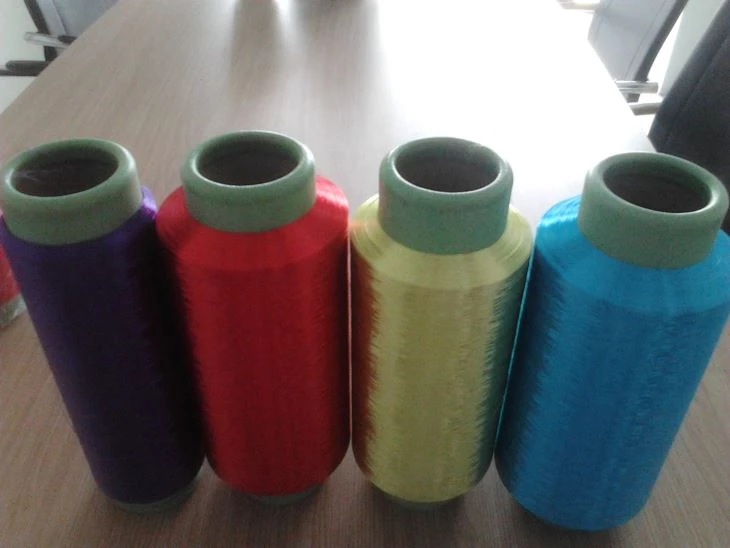

Despite its non - biodegradable nature, PA66 yarn still has a place in the market. It offers performance benefits that are hard to match. For instance, in the textile industry, Nylon Filament Dope Dyed Yarn 20D /12F,40D/12F/2PLY, 70D/24F/2PLY is a popular choice for making high - quality fabrics. These yarns are pre - dyed, which means they use less water and energy during the dyeing process compared to traditional dyeing methods. This is a step towards more sustainable manufacturing, even if the yarn itself isn't biodegradable.
In the sewing thread market, NYLON66 SEWING THREAD is widely used because of its strength and durability. It can hold up well under stress, making it ideal for sewing heavy - duty fabrics. And for applications like socks, cloth, and fabric, Nylon6 Dope Dyed DTY AND FDY Yarn for socks, cloth , fabric and so on provides a good balance between performance and cost - effectiveness.
When it comes to the environmental impact of PA66 yarn, we also need to consider its end - of - life management. Instead of just throwing it away, we can look into recycling options. Recycling PA66 yarn can reduce the amount of waste going to landfills. There are already some recycling facilities that can break down PA66 products and turn them into new materials. This not only conserves resources but also reduces the demand for virgin materials.
Another aspect to consider is the overall lifecycle of products made with PA66 yarn. For example, in the automotive industry, PA66 is used in parts like airbags and engine components. These parts have a long service life, which means they don't need to be replaced as often. This reduces the overall environmental impact compared to products that have a shorter lifespan and need to be replaced frequently.
So, while PA66 yarn isn't biodegradable in the traditional sense, there are ways to make its use more sustainable. As a supplier, I'm committed to working with customers to find the best solutions for their needs while also being mindful of the environment.
If you're in the market for high - quality PA66 yarn, whether it's for textile manufacturing, industrial applications, or any other use, I'd love to have a chat with you. We can discuss your specific requirements and see how we can meet them. Reach out to me to start a conversation about your PA66 yarn needs and let's work together to find the best solutions.
References
- "Polymer Science and Technology" by Seymour S. Rosen
- Journal articles on synthetic polymers and environmental impact