

Hey there! I'm a supplier of PA yarn, and I know firsthand how annoying static can be in this type of yarn. Static not only makes the yarn difficult to handle during production but can also lead to issues like fiber entanglement and poor end - product quality. In this blog, I'll share some practical ways to reduce static in PA yarn.
Understanding the Cause of Static in PA Yarn
Before we jump into the solutions, it's important to understand why static occurs in PA yarn. PA yarn, also known as nylon yarn, is a synthetic fiber. When nylon fibers rub against each other or other materials during processing, electrons are transferred, creating an imbalance of charges and thus static electricity. Factors such as low humidity, high - speed processing, and the use of certain chemicals can exacerbate this problem.
Adjusting the Humidity
One of the simplest and most effective ways to reduce static in PA yarn is to control the humidity in the production environment. Dry air is a major culprit in static build - up. By increasing the humidity, we can make the air more conductive, allowing the static charges to dissipate more easily.
A relative humidity level of around 60 - 70% is ideal for PA yarn processing. You can use humidifiers to achieve and maintain this level. In large production facilities, industrial - grade humidifiers are available that can cover a wide area. For smaller workshops, portable humidifiers can also do the job.
However, be careful not to over - humidify, as too much moisture can lead to other problems such as mold growth on the yarn or corrosion of equipment.
Using Anti - Static Agents
Anti - static agents are another great option for reducing static in PA yarn. These agents work by forming a thin layer on the surface of the yarn fibers, which helps to conduct the static charges away.
There are two main types of anti - static agents: internal and external. Internal anti - static agents are added during the polymerization process of the PA yarn. They become an integral part of the fiber structure, providing long - lasting anti - static properties. External anti - static agents, on the other hand, are applied after the yarn is produced. They can be in the form of sprays, baths, or finishes.
When choosing an anti - static agent, make sure it is compatible with the PA yarn and the subsequent processing steps. Some agents may affect the color, texture, or strength of the yarn, so it's important to test them on a small sample first.
Modifying the Processing Equipment
The design and operation of the processing equipment can also have a significant impact on static generation. For example, using smooth - surfaced guides and rollers can reduce friction between the yarn and the equipment, thereby minimizing static build - up.
In addition, grounding the equipment properly is crucial. Static charges can accumulate on the equipment during operation, and if it's not grounded, these charges can be transferred to the yarn. By connecting the equipment to a proper grounding system, the static charges can be safely discharged to the ground.

Another way to modify the equipment is to reduce the processing speed. High - speed processing often generates more friction and static. By slowing down the production line, we can reduce the amount of static generated. However, this may affect the production efficiency, so a balance needs to be struck.
Choosing the Right Packaging
The packaging of PA yarn can also play a role in reducing static. Using anti - static packaging materials, such as anti - static bags or films, can help to prevent static charges from building up during storage and transportation.
These anti - static packaging materials are designed to dissipate static charges and protect the yarn from external electrostatic fields. They are available in various sizes and thicknesses to suit different packaging needs.
Our PA Yarn Products
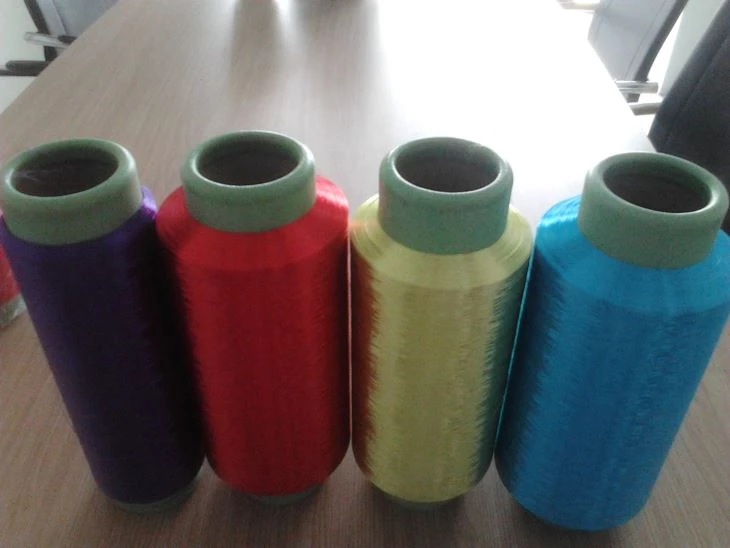
As a PA yarn supplier, we offer a wide range of high - quality products. Check out our Nylon Filament Dope Dyed Yarn 20D /12F,40D/12F/2PLY, 70D/24F/2PLY. These yarns are dope - dyed, which means they have excellent color fastness and are less prone to color bleeding. They are suitable for a variety of applications, including textiles, sportswear, and accessories.
We also have Nylon6 Dope Dyed DTY AND FDY Yarn for socks, cloth, fabric and so on. This yarn is made from high - quality Nylon6 and is available in different deniers and twists. It's perfect for making socks, clothing, and other fabric products.
And if you're looking for sewing thread, our NYLON66 SEWING THREAD is a great choice. It has high strength and good abrasion resistance, making it suitable for heavy - duty sewing applications.
Conclusion
Reducing static in PA yarn is a multi - faceted problem that requires a combination of solutions. By adjusting the humidity, using anti - static agents, modifying the processing equipment, and choosing the right packaging, we can effectively minimize static build - up and improve the quality of the yarn.
If you're interested in our PA yarn products or have any questions about reducing static in PA yarn, feel free to contact us for a procurement discussion. We're always happy to help you find the best solutions for your needs.
References
- "Textile Science and Technology: Yarn Formation" by Subhash Anand
- "Handbook of Fiber Science and Technology" edited by Mark Lewin and Eli M. Pearce
- Industry reports on synthetic fiber processing and static control