

How to produce high - performance PET yarn?
As a seasoned PET yarn supplier, I understand the intricacies involved in producing high - performance PET (Polyethylene Terephthalate) yarn. High - performance PET yarn is characterized by its superior strength, excellent durability, resistance to chemicals, and aesthetic appeal. In this blog post, I'll share some key steps and factors that contribute to the production of such high - quality yarn.
Raw Material Selection
The foundation of high - performance PET yarn begins with the selection of raw materials. The quality of PET resin used has a direct impact on the final properties of the yarn. We always source high - grade PET resin that has a consistent molecular weight and low levels of impurities. This ensures that the yarn will have uniform physical and chemical properties throughout its length.
Moreover, advancements in raw material technology have led to the development of specialized PET resins that can enhance specific properties of the yarn. For example, Cationic Dyeable Polyetser Fibre is made from a modified PET resin that allows for easier and more vibrant dyeing. This type of yarn is highly sought after in the textile industry for applications where colorfastness and vivid colors are required.
Polymerization Process
The polymerization process is a critical step in converting PET resin into a form suitable for yarn production. We employ a well - controlled polymerization method to ensure that the PET molecules chain - grow uniformly. This results in a polymer with the right molecular weight distribution, which is essential for achieving the desired tenacity and elasticity of the yarn.
Temperature, pressure, and the use of catalysts are closely monitored during polymerization. Any deviation from the optimal parameters can lead to inconsistencies in the polymer structure, which will translate into variations in the yarn's performance. For instance, if the molecular weight is too low, the yarn may lack strength, while an overly high molecular weight can make the polymer difficult to process.
Melt Spinning
Once the polymer is ready, it is melted and extruded through tiny holes in a spinneret in a process called melt spinning. The spinneret design is carefully selected based on the desired yarn denier and cross - sectional shape. A well - designed spinneret can ensure uniform flow of the molten polymer, which is crucial for producing yarn with consistent diameter and quality.
The temperature of the molten polymer during spinning also plays a vital role. If the temperature is too high, the polymer may degrade, leading to a weaker yarn. On the other hand, if it is too low, the polymer may not flow smoothly, causing defects in the yarn such as thick and thin spots.
After exiting the spinneret, the newly formed filaments are rapidly cooled using air or water to solidify them. The cooling rate affects the crystalline structure of the PET, which in turn influences the yarn's mechanical properties. A faster cooling rate generally results in a more amorphous structure, which can provide better flexibility, while a slower cooling rate promotes crystallization, leading to higher strength.
Drawing and Texturing
Drawing is the process of stretching the newly solidified filaments to align the polymer molecules in the direction of the yarn axis. This orientation significantly enhances the strength and modulus of the yarn. We carefully control the drawing ratio, which is the ratio of the final length of the yarn to its initial length. A proper drawing ratio is crucial for achieving the optimal balance between strength and elongation.
Texturing is another important step that imparts bulk and elasticity to the yarn. There are different texturing methods, but the most common one for PET yarn is draw - texturing. This process involves heating and deforming the drawn yarn to create a three - dimensional crimp structure. The textured yarn not only has better drape and cover but also provides enhanced comfort when used in textile applications.
Chemical and Physical Treatments
To further improve the performance of the PET yarn, we often subject it to various chemical and physical treatments. For example, applying an anti - static finish can prevent the build - up of static electricity, which is especially important in applications such as carpets and upholstery. A water - repellent treatment can make the yarn suitable for outdoor fabrics.
Dyeing is also a significant treatment. PET polyester Dope Dyed DTY Yarn for knitting, weaving and so on is a prime example of how dyeing can be integrated into the production process. Dope - dyeing involves adding pigments or dyes to the polymer melt before spinning. This method results in a more color - fast and uniform coloration compared to traditional post - spinning dyeing methods.
Quality Control
Throughout the production process, strict quality control measures are in place. We use advanced testing equipment to monitor key parameters such as yarn denier, strength, elongation, and colorfastness. Samples are taken at regular intervals to ensure that the yarn meets the specified standards.
For example, we conduct tensile strength tests to measure the maximum force the yarn can withstand before breaking. Elongation at break tests determine how much the yarn can stretch before failure. These tests help us identify any potential quality issues early on and make necessary adjustments to the production process.

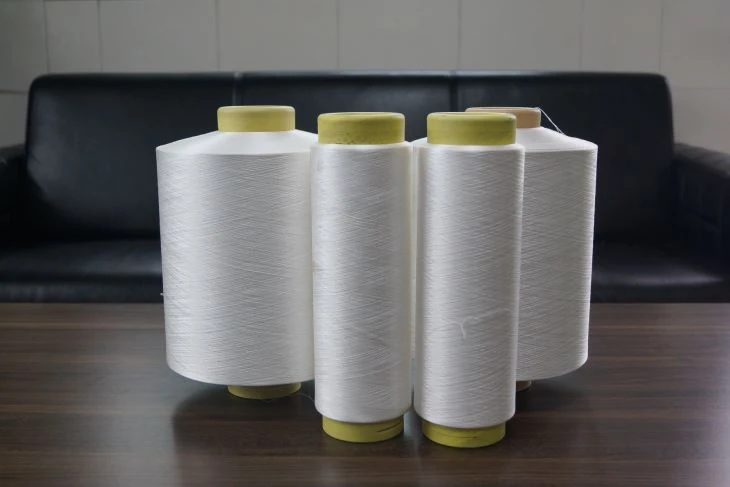
Innovation and R & D
In the highly competitive PET yarn market, continuous innovation and research and development (R & D) are essential. We invest in R & D to develop new types of high - performance yarns that can meet the evolving needs of our customers. For instance, 100PCT POLYESTER DRAW TEXTURED OF POLY TRIMETHYLENE TEREPHTALATE YARN DOPE DYED BLACK 1H SIM 50D/48F is a product of our R & D efforts, offering unique properties such as softness and stretchability.
We also collaborate with research institutions and industry partners to stay at the forefront of technological advancements. This allows us to incorporate the latest findings into our production processes and develop revolutionary products.
Connecting with Buyers
Producing high - performance PET yarn is just the first step. We are always eager to connect with buyers who are looking for quality PET yarn for their specific applications. Whether you are in the textile manufacturing, automotive, or packaging industry, our high - performance PET yarn can meet your demands. If you are interested in learning more about our products or would like to discuss a potential purchase, please reach out to us. We look forward to the opportunity to work with you and provide the best PET yarn solutions for your business.
References
- "Polyester Fibers: Science and Technology" by Alfred J. East and Michael Lewis
- "Textile Yarns: Science, Technology, and Practice" by B. K. Behera and S. K. Samanta
- Industry reports from leading textile and petrochemical research organizations