

As a seasoned supplier of PA yarn, I've encountered numerous inquiries regarding the dyeing process of PA yarn. PA, or polyamide, is a synthetic fiber known for its durability, strength, and excellent abrasion resistance. These qualities make it a popular choice in various industries, from textiles to automotive components. But the question remains: can PA yarn be dyed easily?
Understanding PA Yarn
Before delving into the dyeing process, it's essential to understand the nature of PA yarn. PA yarn is typically made from polyamide polymers, which can be classified into different types, such as Nylon 6 and Nylon 66. These polymers have a unique molecular structure that affects their dyeability.
The amide groups in the polyamide molecules are polar, which means they can form hydrogen bonds with dye molecules. This characteristic gives PA yarn a relatively high affinity for certain types of dyes, making it possible to achieve vibrant and long - lasting colors.
Factors Affecting the Dyeability of PA Yarn
1. Dye Type
There are several types of dyes that can be used to color PA yarn, including acid dyes, disperse dyes, and reactive dyes.
- Acid Dyes: These are the most commonly used dyes for PA yarn. Acid dyes have a negative charge and can form ionic bonds with the positively charged amino groups in the polyamide molecules. They offer excellent color fastness and a wide range of bright colors. However, the dyeing process usually requires an acidic environment, which can be a challenge to control.
- Disperse Dyes: Disperse dyes are non - ionic and are mainly used for dyeing PA yarns in combination with other synthetic fibers. They have good heat resistance and are suitable for deep - shade dyeing. But they may have lower color fastness compared to acid dyes.
- Reactive Dyes: Reactive dyes react chemically with the amide groups in the polyamide molecules, forming covalent bonds. This results in excellent color fastness, especially to washing and light. However, the dyeing process is more complex and requires specific conditions.
2. Yarn Structure
The structure of the PA yarn, such as its denier (thickness) and twist, can also affect dyeability. Finer yarns generally have a larger surface area per unit mass, which means they can absorb more dye and achieve more uniform coloration. On the other hand, highly twisted yarns may have a denser structure, making it more difficult for the dye to penetrate evenly.

3. Pretreatment
Pretreatment of the PA yarn is crucial for achieving good dyeing results. This may include scouring to remove impurities, such as spinning oils and dirt, and bleaching to improve the whiteness of the yarn. A proper pretreatment can enhance the dye's ability to penetrate the yarn and improve color uniformity.
The Dyeing Process of PA Yarn
1. Preparation
Before dyeing, the PA yarn needs to be properly prepared. This involves washing the yarn to remove any contaminants and adjusting its moisture content. The yarn is then loaded into the dyeing machine, which can be a batch - type or continuous - type machine.
2. Dye Bath Preparation
The dye bath is prepared by dissolving the selected dye in water and adding appropriate auxiliaries, such as leveling agents, pH regulators, and electrolytes. The pH of the dye bath is a critical factor, especially when using acid dyes. A lower pH (around 4 - 6) is usually required to ensure good dye uptake.
3. Dyeing
The dyeing process typically involves heating the dye bath to a specific temperature and maintaining it for a certain period. The temperature and time depend on the type of dye and the desired color depth. For example, acid dyes are usually dyed at temperatures between 90 - 100°C for 30 - 60 minutes.
During the dyeing process, the dye molecules diffuse into the yarn and bind to the polyamide molecules. Stirring or circulation of the dye bath is necessary to ensure uniform dye distribution.
4. After - treatment
After dyeing, the yarn needs to be thoroughly washed to remove any un - fixed dye and auxiliaries. This is followed by a soaping process to improve color fastness. Finally, the yarn is dried and can be further processed into various products.
Our PA Yarn Products and their Dyeability
As a PA yarn supplier, we offer a wide range of PA yarn products, each with its own dyeing characteristics.
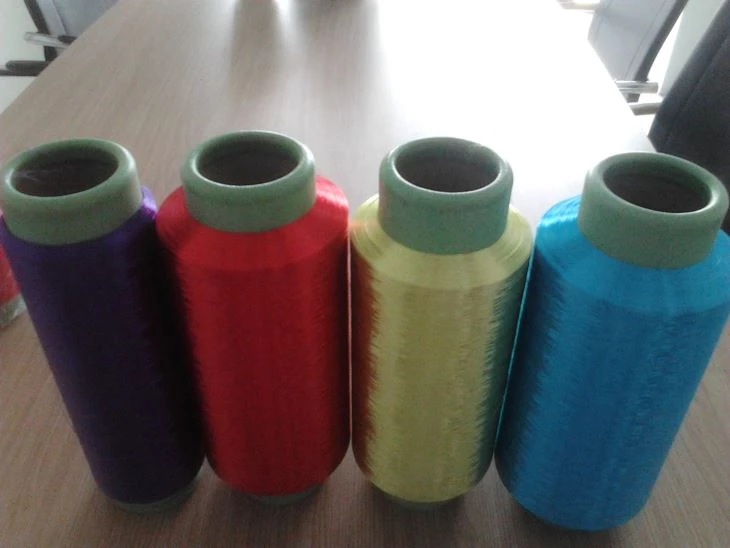
- DTY AND FDY polyamide Nylon56 Dope Dyed Yarn or PA 56 yarn: Our Nylon 56 yarn has a unique molecular structure that gives it good dyeability. It can be easily dyed with acid dyes to achieve bright and long - lasting colors. The dope - dyed process ensures that the color is evenly distributed throughout the yarn, offering excellent color fastness.
- Nylon6 Dope Dyed DTY AND FDY Yarn for socks, cloth, fabric and so on: Nylon 6 yarn is a popular choice for various textile applications. It has a relatively high affinity for acid dyes and can be dyed to a wide range of colors. Our dope - dyed Nylon 6 yarns are pre - colored during the spinning process, which saves time and resources in the dyeing process.
- Nylon Filament Dope Dyed Yarn 20D /12F,40D/12F/2PLY, 70D/24F/2PLY: Our nylon filament dope - dyed yarns come in different deniers and filament counts. These yarns are suitable for applications where fine and uniform coloration is required. The dope - dyed technology ensures that the color is an integral part of the yarn, providing excellent color fastness and resistance to fading.
Conclusion
In conclusion, PA yarn can be dyed, and in many cases, it can be dyed relatively easily. Factors such as the type of dye, yarn structure, and pretreatment play important roles in the dyeing process. With the right combination of these factors, vibrant and long - lasting colors can be achieved.
At our company, we are committed to providing high - quality PA yarn products with excellent dyeability. Whether you are looking for yarns for socks, fabrics, or other applications, we have the right solution for you.
If you are interested in our PA yarn products and would like to discuss your specific dyeing requirements or place an order, please feel free to contact us. We look forward to the opportunity to work with you and help you achieve the perfect colors for your products.
References
- Zollinger, H. (2003). Color Chemistry: Syntheses, Properties and Applications of Organic Dyes and Pigments. Wiley - VCH Verlag GmbH & Co. KGaA.
- Shore, J. (1995). Chemical Principles of Textile Coloration. Society of Dyers and Colourists.
- Lewis, D. M. (2007). The Science of Colour. Royal Society of Chemistry.