

As a seasoned dope dyed supplier, I've often been asked a rather interesting question: Can dope dyed be used on wood? This inquiry has piqued my curiosity, and I've delved deep into the topic to provide a comprehensive answer. In this blog, I'll explore the concept of dope dyed, its traditional applications, and the feasibility of using it on wood.
Understanding Dope Dyed
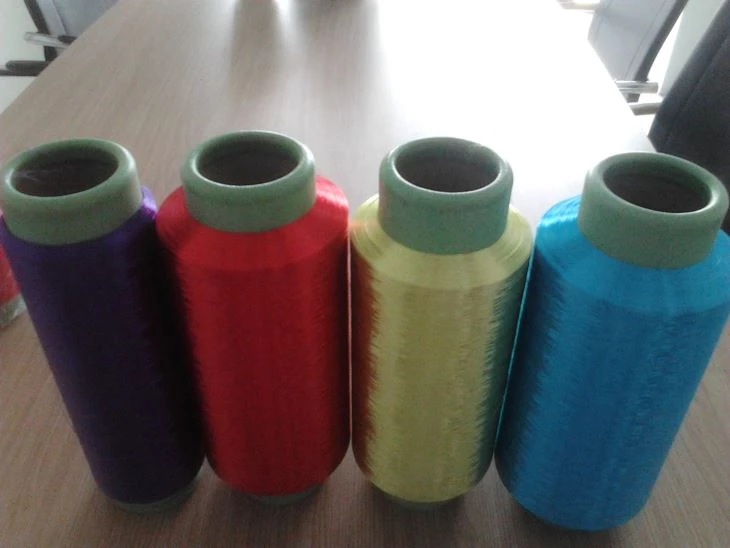
Dope dyed, also known as solution dyeing, is a process where colorants are added to the polymer solution before the fiber is formed. This method ensures that the color is an integral part of the fiber, resulting in vibrant, long - lasting colors that are resistant to fading, washing, and abrasion.
Our company offers a wide range of dope dyed products, including Nylon6 Dope Dyed DTY AND FDY Yarn for socks, cloth, fabric and so on, DTY AND FDY polyamide Nylon56 Dope Dyed Yarn or PA 56 yarn, and Nylon Filament Dope Dyed Yarn 20D /12F,40D/12F/2PLY, 70D/24F/2PLY. These yarns are widely used in the textile industry, where their colorfastness and durability are highly valued.
Traditional Applications of Dope Dyed
The primary application of dope dyed is in the textile industry. It is used to color synthetic fibers such as nylon, polyester, and acrylic. These fibers are then used to make a variety of products, including clothing, carpets, upholstery, and outdoor fabrics. The advantage of dope dyed in textiles is that it provides superior colorfastness compared to traditional dyeing methods. For example, outdoor fabrics dyed using dope dyed technology can withstand years of exposure to sunlight, rain, and other environmental factors without fading.
In addition to textiles, dope dyed is also used in the production of some plastics and synthetic materials. For instance, it can be used to color plastic pipes, automotive parts, and consumer goods. The color added through dope dyed is more consistent and long - lasting than surface - applied colors, making it ideal for products that require high - quality and durable coloration.
The Feasibility of Using Dope Dyed on Wood
At first glance, using dope dyed on wood seems like an unusual idea. Wood is a natural material, and dope dyed is typically associated with synthetic polymers. However, let's break down the factors to assess its feasibility.
Chemical Compatibility
One of the main challenges is the chemical compatibility between the dope dyed colorants and wood. Wood is composed mainly of cellulose, hemicellulose, and lignin. These natural polymers have different chemical properties compared to the synthetic polymers used in dope dyed processes. The colorants used in dope dyed are formulated to bond with synthetic polymers during the fiber - forming process. It's unclear whether these colorants can effectively bond with the components of wood.
However, with the development of advanced chemical engineering, it might be possible to modify the dope dyed colorants to make them compatible with wood. For example, some researchers are exploring the use of bio - based polymers that can interact with wood components. If the colorants can be incorporated into these bio - based polymers, there could be a potential for dope dyed - like coloration on wood.
Penetration and Absorption
Another aspect to consider is the penetration and absorption of the dope dyed colorants into the wood. In the textile industry, the colorants are added to the polymer solution before fiber formation, ensuring uniform color distribution throughout the fiber. In the case of wood, the colorants would need to penetrate the cell walls of the wood to achieve a similar effect.

Wood has a complex cellular structure with different densities and pore sizes depending on the wood species. Some woods have a more open structure, which might allow for better penetration of the colorants. However, in general, getting the colorants to penetrate deeply and evenly into the wood would be a significant challenge. Specialized techniques such as pressure treatment or vacuum impregnation might be required to enhance the penetration of the colorants.
Aesthetic and Functional Requirements
From an aesthetic perspective, using dope dyed on wood could potentially offer unique color effects. Unlike traditional wood staining methods, which mainly color the surface of the wood, dope dyed could provide a more uniform and long - lasting color throughout the wood. This could be appealing for high - end furniture, interior design elements, and decorative wood products.
Functionally, the colorfastness provided by dope dyed could be beneficial for wood products that are exposed to harsh environments. For example, outdoor wooden structures such as decks and fences could benefit from the improved resistance to fading and weathering.
Potential Advantages of Using Dope Dyed on Wood
If the technical challenges can be overcome, there are several potential advantages of using dope dyed on wood.
Enhanced Colorfastness
As mentioned earlier, dope dyed offers excellent colorfastness. Wood products colored using this method would be more resistant to fading caused by sunlight, moisture, and chemicals. This would increase the lifespan of the wood products and reduce the need for frequent refinishing or staining.

Uniform Coloration
Dope dyed can provide a more uniform color throughout the wood compared to traditional staining methods. This is especially important for large - scale wood projects where color consistency is crucial. For example, in the production of wooden flooring or paneling, a uniform color can enhance the overall aesthetic appeal.
Environmental Benefits
Some dope dyed colorants are more environmentally friendly compared to traditional wood stains. They may contain fewer volatile organic compounds (VOCs), which are harmful to the environment and human health. By using dope dyed on wood, we could potentially reduce the environmental impact of wood finishing processes.
Challenges and Future Research
Despite the potential advantages, there are still many challenges that need to be addressed before dope dyed can be widely used on wood.
Research and Development
More research is needed to develop colorants that are specifically designed for wood and can be applied using a dope dyed - like process. This would involve studying the chemical interactions between the colorants and wood components, as well as developing appropriate application techniques.
Cost - Effectiveness
The cost of developing and applying dope dyed technology to wood needs to be considered. Currently, dope dyed is mainly used in the synthetic fiber industry, where economies of scale have made it cost - effective. Adapting this technology to wood may require significant investment in new equipment and processes, which could increase the cost of wood products.
Conclusion
In conclusion, while the idea of using dope dyed on wood is still in the experimental stage, it holds great potential. The unique properties of dope dyed, such as enhanced colorfastness and uniform coloration, could bring new opportunities to the wood industry. However, there are significant technical challenges that need to be overcome, including chemical compatibility, penetration, and cost - effectiveness.

As a dope dyed supplier, I'm excited about the possibility of exploring this new application. I believe that with continued research and development, we may be able to find a way to use dope dyed on wood effectively.
If you're interested in learning more about our dope dyed products or discussing potential applications, please don't hesitate to contact us for procurement and further discussions. We're always eager to engage with customers and explore new possibilities together.
References
- "Textile Coloration and Finishing" by Felix J. Bayer
- "Wood Science and Technology" by Rudolf P. Stamm
- Research papers on advanced polymer - wood interactions from academic journals