

Hey there! As a PA yarn supplier, I often get asked a common question: "Does PA yarn shrink when washed?" Well, let's dive right into this topic and find out.
First off, PA yarn stands for polyamide yarn, which is more commonly known as nylon. Nylon is a synthetic fiber that has been around for quite a while and is used in a wide range of products, from socks and clothing to industrial applications.
Now, the shrinkage of PA yarn when washed depends on several factors. One of the main factors is the type of nylon. There are different types of nylon, such as nylon 6 and nylon 66. Each type has its own properties and characteristics, which can affect how it behaves when exposed to water and heat.
Nylon 6 is a popular choice for many applications, including Nylon6 Dope Dyed DTY AND FDY Yarn for socks, cloth, fabric and so on. It's known for its good strength and elasticity. Generally, nylon 6 yarn doesn't shrink much when washed under normal conditions. If you follow the care instructions, which usually involve using a gentle cycle and cold water, the shrinkage is minimal. However, if you expose it to high temperatures, like hot water in a washing machine or a high - heat dryer, it can start to shrink. The heat causes the polymer chains in the nylon to contract, leading to shrinkage.

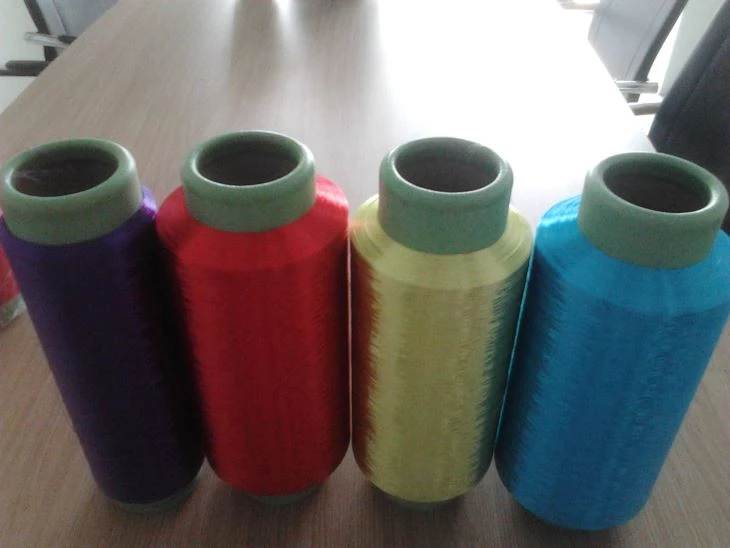
On the other hand, nylon 66 is often used in applications like NYLON66 SEWING THREAD. Nylon 66 has a higher melting point compared to nylon 6. It is also more resistant to shrinkage under normal washing conditions. But again, extreme heat can cause it to shrink. The key is to avoid high - temperature washing and drying.
Another factor that affects shrinkage is the manufacturing process of the yarn. If the yarn has been heat - set during production, it is more stable and less likely to shrink. Heat - setting involves exposing the yarn to a specific temperature for a certain period of time to set the shape of the fibers. This process helps to lock in the structure of the yarn and reduces the chances of shrinkage when washed.
The twist of the yarn also plays a role. A higher - twist yarn is generally more resistant to shrinkage. The tight twist holds the fibers together, making it harder for them to move and contract when exposed to water and heat.
Now, let's talk about how to prevent shrinkage of PA yarn. As I mentioned earlier, using cold water and a gentle cycle in the washing machine is a good start. Avoid using hot water, as it can cause the nylon to shrink. Also, try to air - dry the yarn instead of using a dryer. If you have to use a dryer, set it to the lowest heat setting.
When it comes to our products, we offer high - quality PA yarns that are designed to minimize shrinkage. For example, our Nylon Filament Dope Dyed Yarn 20D /12F,40D/12F/2PLY, 70D/24F/2PLY is carefully manufactured with advanced techniques to ensure stability and low shrinkage. We use heat - setting processes during production to make the yarn more resistant to shrinkage.
In addition, we conduct strict quality control measures to ensure that our yarns meet the highest standards. We test the yarns for shrinkage under different conditions to make sure that they perform well when washed.
If you're in the market for PA yarn, whether it's for making socks, clothing, or other products, we're here to help. Our team of experts can provide you with all the information you need about our yarns, including their shrinkage properties. We can also offer advice on how to care for the yarn to prevent shrinkage.
If you're interested in purchasing our PA yarn, we'd love to have a chat with you. We can discuss your specific requirements and provide you with a quote. Whether you need a small quantity for a prototype or a large order for mass production, we've got you covered.
In conclusion, PA yarn doesn't necessarily shrink when washed, but it can under certain conditions. By choosing the right type of yarn, following proper care instructions, and using high - quality products from a reliable supplier like us, you can minimize the risk of shrinkage. So, don't hesitate to reach out if you have any questions or if you're ready to start a partnership with us.
References:
- Textile Science and Technology textbooks
- Industry research reports on synthetic fibers